
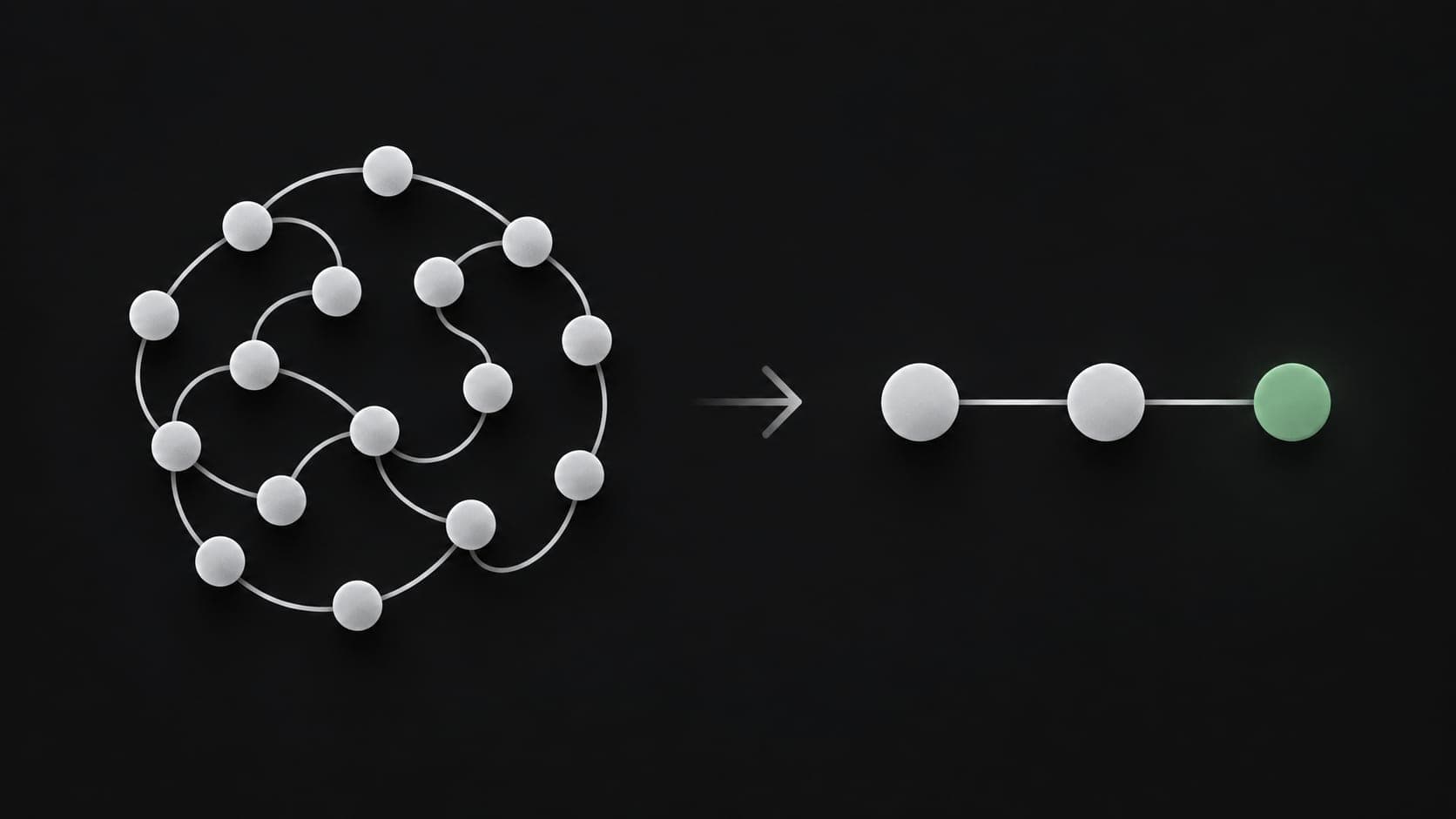
The word "automation" tends to raise the same question: is this about replacing staff? In practice, the automation that actually gets built for small and growing businesses is almost always aimed at the opposite goal — removing the repetitive parts of a job so the people doing it can spend time on the parts that actually need a human.
Where repetitive work usually hides
It rarely announces itself as "a process." It shows up as small habits: copying a new enquiry from an email into a spreadsheet, manually forwarding a form submission to the right team member, re-typing an order from a WhatsApp message into an internal system, checking a shared inbox every hour for anything new. Each task takes a few minutes. Multiplied across a week, they quietly consume hours that never show up as a single line item anywhere.
What automation actually does
At its core, automation connects steps that currently rely on a person moving information manually from one place to another. A form submission can automatically create a record in a CRM. A new order can automatically notify the right person on the team. A lead that goes untouched for a day can automatically trigger a reminder. None of this requires artificial intelligence or anything exotic — it's mostly about wiring existing tools together so information moves on its own.
The compounding effect of small automations
Individually, automating one small task might save a few minutes a day. That sounds negligible until you consider it happens every day, for every relevant task, indefinitely. A handful of well-placed automations — lead intake, order notifications, approval routing — can add up to hours of reclaimed time per week across a team, along with fewer errors from manual re-entry.
It also improves consistency, not just speed
A person forwarding enquiries manually will occasionally miss one, especially during a busy period. An automated workflow doesn't get busy. This matters more than it might seem: a missed lead or a delayed order confirmation has a real cost, and automation removes that risk without asking anyone to be more careful.
Where to start
The best first automation to build is usually the most repetitive, most error-prone manual task currently happening — not the most impressive one. If your team spends real time each week copying data between two tools, or manually notifying people about things a system could notice on its own, that's the starting point. It's rarely necessary to automate everything at once; a single, well-chosen automation is often enough to free up meaningful time immediately, with more added as the highest-value opportunities become clear.