
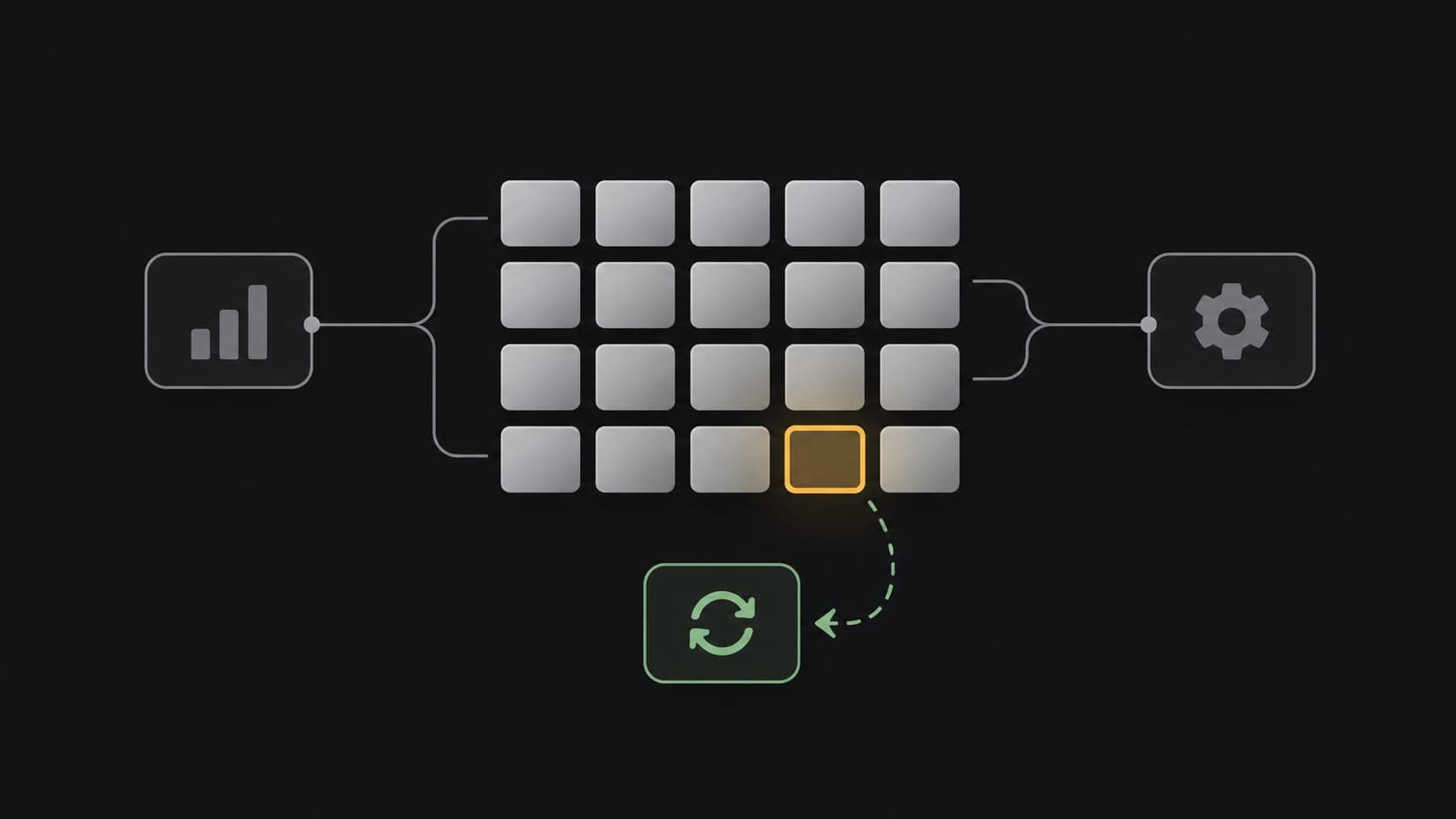
"Inventory management system" can mean a lot of things, from a single-location stock counter to a multi-warehouse platform with supplier integrations. Rather than listing every feature a system could have, it's more useful to separate what almost every business needs from what only applies at certain stages of growth.
The foundation almost every business needs
Regardless of size, a usable inventory system should give you:
- Real-time stock levels that reflect what's actually on hand, not what was true at the last manual count.
- Low-stock alerts, so reordering happens before a shelf goes empty, not after a customer notices.
- Basic product and category organization, so items are easy to find and report on.
- A simple purchase and sales history, so you can see what moved and when without digging through paper receipts or old spreadsheets.
If a system doesn't reliably cover these four things, nothing else about it matters much yet.
What matters once you have more than one location
Multi-branch or multi-warehouse tracking changes the requirements. At this stage, you need stock levels broken out per location, a clear way to record transfers between branches, and reporting that can answer "what do we have company-wide" and "what do we have at this specific branch" equally easily. Without this, growth across locations tends to fragment your stock visibility exactly when you need it most.
What matters once more than one person touches the system
A single owner tracking their own stock has different needs than a team of warehouse staff, purchasers, and managers all using the same system. At this point, role-based permissions and an audit trail stop being nice-to-haves — they're what prevents accidental changes, keeps accountability clear, and makes it possible to trust the data multiple people are entering.
What matters once the business relies on suppliers
If restocking depends on external suppliers, a system should track supplier details, purchase orders, and lead times, so purchasing decisions are based on real data rather than memory. This is also where barcode support tends to earn its keep — it removes a major source of manual entry error at the point where volume makes manual entry impractical.
What's genuinely optional, at least at first
Advanced forecasting, deep third-party integrations, and highly customized reporting dashboards are valuable, but they're refinements — worth adding once the fundamentals are solid, not prerequisites for getting started. Starting with everything at once tends to produce a system that's expensive to build and hard to adopt, when a focused version solving the actual current pain point would have been enough.
The real test
A good inventory system should answer one question instantly, at any time: what do we actually have, right now, and where? If your current setup — spreadsheet or software — can't answer that without a manual check, that's the gap worth solving first.